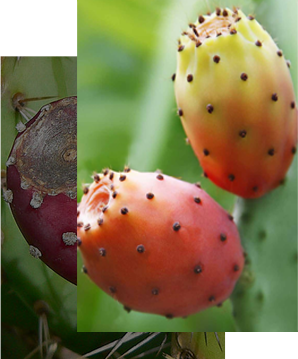

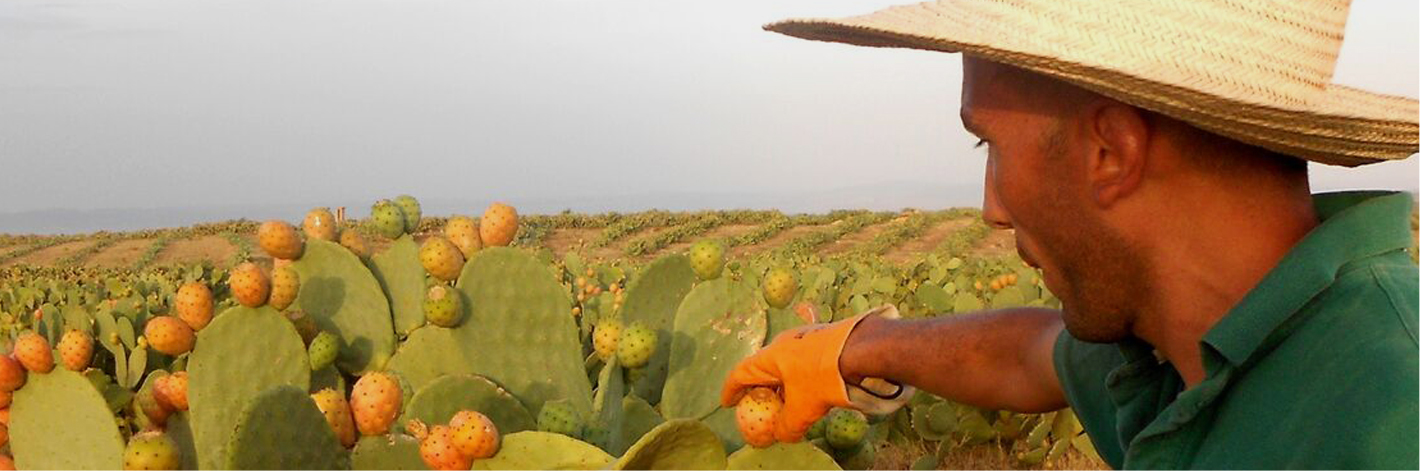
Opuntia Ficus indica


Opuntia ficus-indica

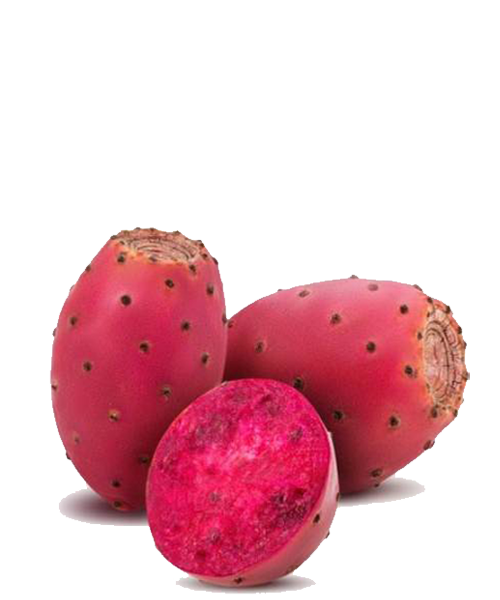
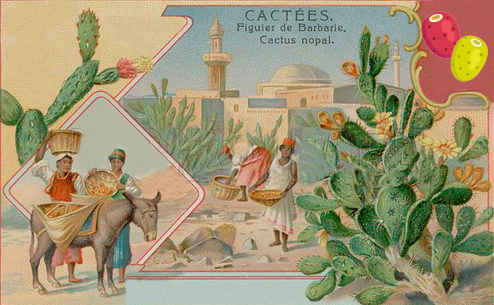
Cactus plants were used by ancient civilizations to cure diseases and heal wounds for thousands of years. The origins and history of cactus as medicine are, therefore, closely linked to the ancient Mesoamerican civilizations. For over 12000 years, fresh cactus has been consumed by the natives for its nutritional qualities and healing properties. Cactus cladodes, fruits, seeds and flowers have been used as folk medicines in several countries for centuries.
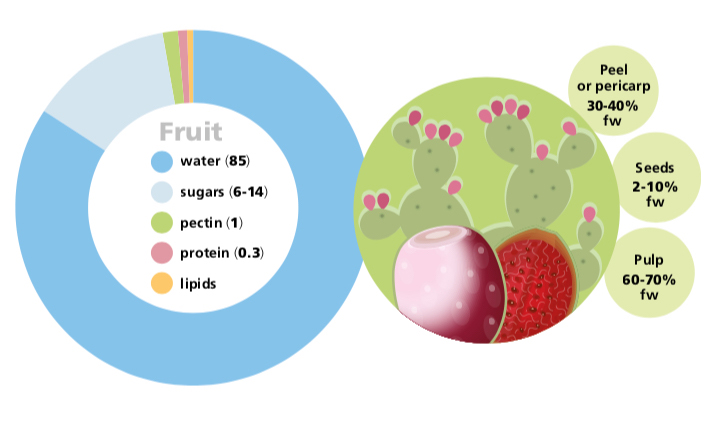
 

Cactus pear is a non-climacteric fruit, it has a low respiration rate (Cantwell, 1995) and low ethylene production. Hence, the nutrient concentrations remain in the fruit without significant changes throughout storage; however, weight and firmness may change.
Furthermore, the fruit’s pH, acidity and total soluble solids do not vary during post-harvest storage.

The chemical and nutritional composition of cactus pears has been extensively studied; Sugars, fibre, mucilage and pectins are the major fruit constituents; proteins, amino acids, vitamins and minerals are the minor components.


There are numerous reports indicating that a diet rich in fruit and vegetables is linked to lower incidence of coronary heart disease and some types of cancer; this suggests that this kind of diet has positive effects on health (Bazzano et al., 2002). These beneficial effects are associated, not only with the nutrient and vitamin content of foods, but with the action of certain bioactive components. Phytochemicals with antioxidant properties promote good health by protecting against the oxidative damage induced by reactive oxygen species (Prakash and Gupta, 2009).

Several studies demonstrate that both cactus fruits and cladodes have high levels of important nutrients, minerals and vitamins, as well as antioxidants. The cactus plant appears to be an excellent source of phytochemicals of nutraceutical importance (El Mostafa et al., 2014). The cactus plant can be fully exploited since its bioactive components can be extracted from its various parts: flowers, fruit, cladodes, roots and seeds (Nazareno, 2014). The figure below summarizes the most relevant medicinal properties ascribed to cactus products.
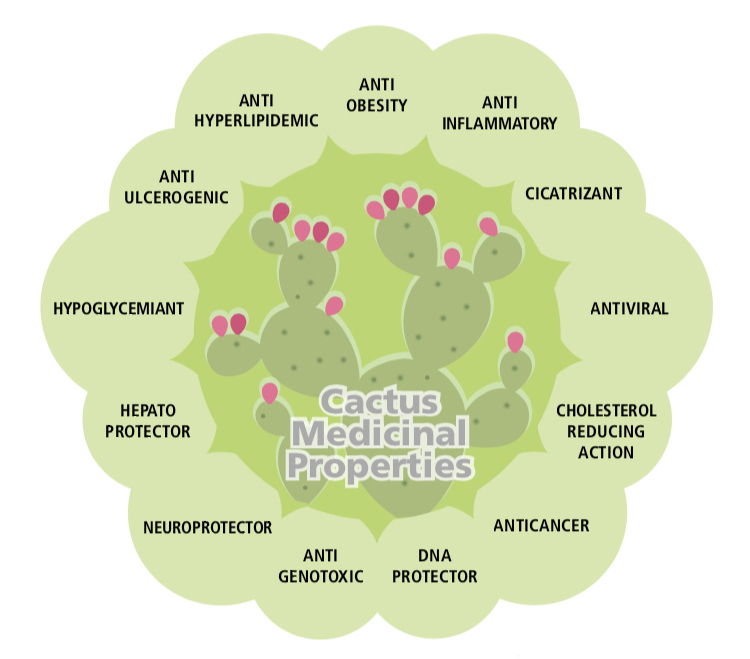
 

SOURCE: CROP ECOLOGY, CULTIVATION AND USES OF CACTUS PEAR

the Food and Agriculture Organization of the United Nations and the International Center for Agricultural Research in the Dry Areas

 

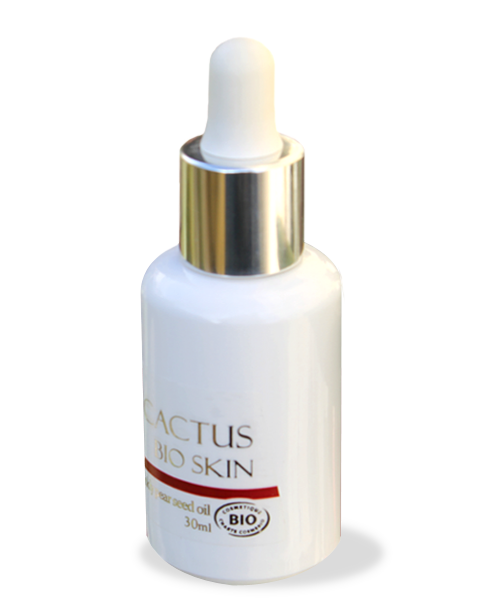
Cactus Bio Skin


About us

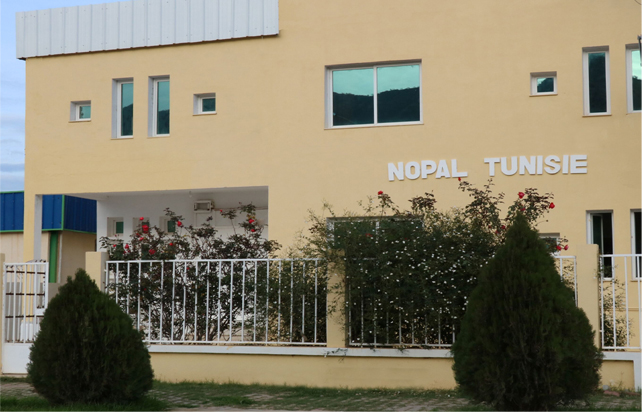
Founded in 2005, NOPAL TUNISIE is a Tunisian company specialized in the production, processing, and export of organic prickly pear and pomegranate to cosmetic, healthcare, and food industry markets. NOPALs’ farms, which are located in the heart of Tunisia near Kasserine, cover around 420ha of cultivated land.

The company’s mission is to offer products in conformity with its customers’ preferences. This entails farming according to the organic farming mode and constantly monitored quality control mechanisms. NOPAL TUNISIE is dedicated to provide the best quality to its clients worldwide.

“The tunisian agro-industry of cactus pear transformation has expanded. Several enterprises, such as “Nopal Tunisia”, specialize in the production and export of organic cactus pear fruit, cosmetics (seed oil, soap and shampoo), foods (jam, frozen pulp and juice) and dried flour made from cactus pads.”


Production

 Prickly pear seed oil

 Prickly pear seed flour

 Prickly pear dried flower

 Prickly pear puree

 Nopal juice

 Nopal powder

 Dried prickly pear fruit

 Prickly pear vinegar

 Pomegranate seed oil

 Pomegranate seed flour

 Pomegranate puree

 Dried pomegranate arills

 Dried pomegranate pills

 Pomegranate vinegar


OUR COMMITMENT

The entire CACTUS BIO SKIN team personally test-runs and approves every product before release. These powerful, stable solutions are prepared in small batches to ensure peak freshness and potency when they arrive at your door.


We are proud to work in line with the following standards:

The United States Department of Agriculture (USDA) Agricultural Marketing Service(AMS) program responsible for administering and enforcing the regulatory framework. The core mission of the NOP is to protect the integrity of the USDA organic seal. The seal is used for products adhering to USDA standards.


COSMOS stands for “COSMetic Organic and Natural Standard”, which sets certification requirements for organic and natural cosmetics products in Europe. The standard is recognized globally by the cosmetic industry.


Cosmebio is the first world association specialized in natural and organic cosmetics [ref. Founded in France in 2002 by a dozen pioneering laboratories, Cosmebio brings together around 375 companies representing around 500 brands and offering more than 9,200 labeled products. Nopal Tunisia is a member of Cosmebio


The organic label of the European Union is a label certifying that a product marketed complies with the EU Regulation on Organic Agriculture, based on the ban on synthetic fertilizers and pesticides. Nopal Tunisia’s products are developed in line with these requirements.


Kosher foods are those that comply with the Jewish food regulations of kashrut (food law). Nopal Tunisia products are developed in accordance with these requirements


FSSC 22000 is an international standard for food safety. It is applicable for all organizations in the agri-food sector. Nopal Tunisia has been certified FSSC 22000 by PROCERT Switzerland since 2016.